privacy
friends are posting faces, voices and messages. here's exactly where they go, in plain words.
the short version
- a birthday site is like a group card you hand around: anyone with the link can see every card on it.
- birthday sites are unlisted: they tell search engines not to index them, so they don't show up in search results.
- friends don't make accounts, so there's no friend profile, password or email address to leak.
- the host can hide or delete any card.
what anyone with the link can see
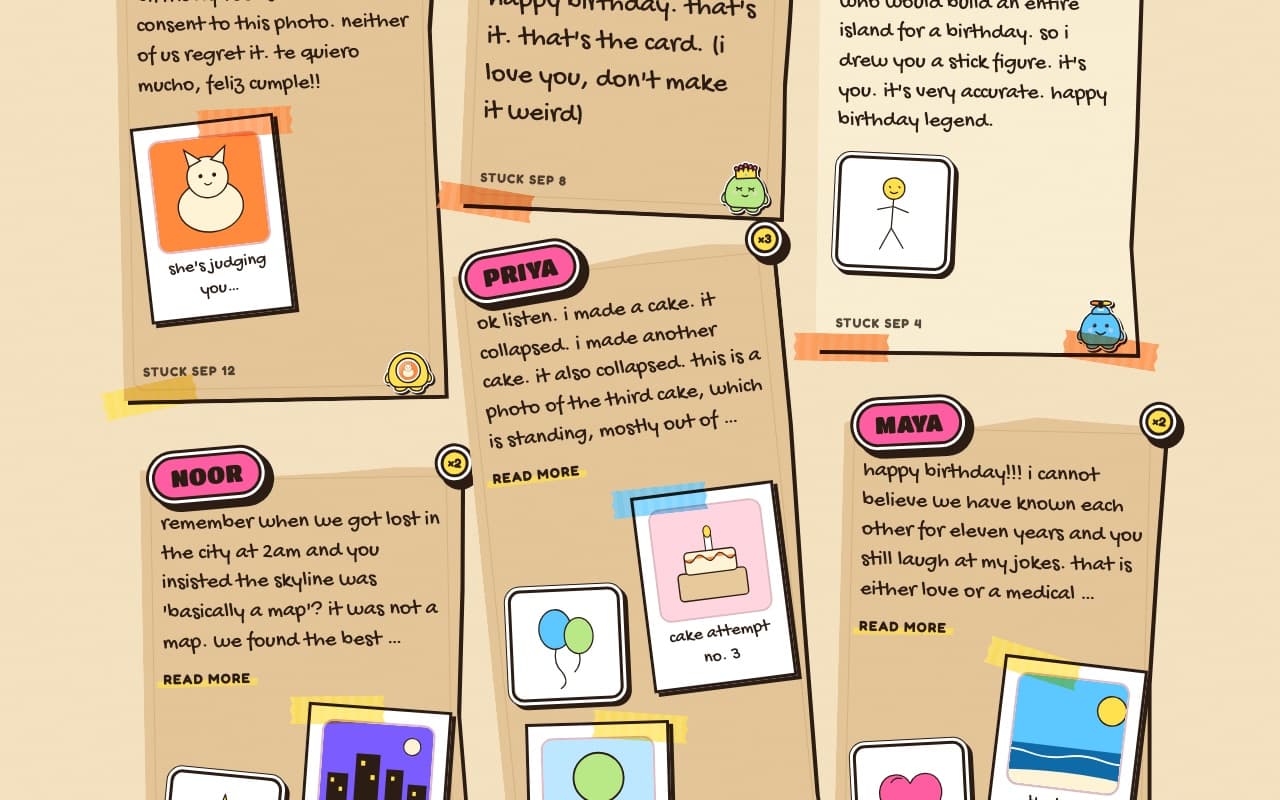
every card that's showing: the name, the message, the doodles, photos and clip, and the blob's look. the same cards appear on the board, on the island and in the games. the birthday person's photos and name on the front page are visible to the same people.
photos, doodles and videos are stored as files at long, random, unguessable addresses. that keeps them from being found by accident, but it isn't a lock: someone who has a file's exact address can open it, the same way someone holding a printed card can read it.
staying out of search
every birthday site sends a no-index signal on every page and tells search engine crawlers not to look at it at all. link previews in chat apps still work (that's how a shared link gets its picture), because those come from fetching the page you send, not from search. this storefront you're reading is the only part of birthdayland meant to be found. if a birthday site's address is ever posted somewhere public, the no-index signal still asks search engines to leave it out, but anyone who sees the post can follow the link.
what stays on your device
a few small things live only in your own browser: whether you muted the music, an unsent card draft, which friends you've already hugged on the island, and your festival scores and stickers. none of that is sent anywhere. there's one more: a private key that proves a card is yours. your browser sends it to the birthday site only when you make or edit your card (or add a photo to it), and the site keeps just a scrambled fingerprint of it, never the key itself. clearing your browser's site data removes all of it, and after that the card can only be changed by the host.
what to tell friends
one line when you share the link is enough: "anything you post here is visible to everyone who has this link. it's a group card, not a private message." it sets the right expectations, and it tends to make the cards better, not more guarded.
faces, voices and videos
nobody has to show their face. every blob starts with a cute doodle face, and a friend can keep it, or pick one of their photos or clips to wear instead. a picture of their dog works fine.
the browser asks for camera and microphone access only at the steps that use them, and nothing is captured until the friend presses the button. a clip that's been recorded can be watched back and redone before the card is stuck.
what we don't do
- no ads, and no selling or sharing friends' cards with anyone.
- no tracking of friends across other sites.
- no public profiles, follower counts or friend lists outside the birthday site itself.
- no use of the birthday person's or friends' photos on this storefront. every picture here comes from a made-up demo birthday.
birthdayland isn't made for children under 13, and birthday sites shouldn't be made for them.
keep reading
leaving a card
a friend's guide to the card maker: the seven steps, limits, and editing later.
faq
accounts, phones, privacy, how long a site stays up, and what it costs.
how it works
the whole flow: you set it up, friends add cards from one link, the birthday person explores an island of them.
want to see it for real? the demo island is a finished site for a made-up friend called sam.